
Dry Aged vs Wet Aged: Which Method Produces Better Beef?
Key Takeaways
-
Dry aging and wet aging are two distinct processes that improve beef tenderness and flavor, but they produce very different results.
-
Dry-aged beef develops a deeper, richer, and more concentrated flavor due to moisture loss and enzymatic activity.
-
Wet-aged beef retains more moisture, resulting in a milder flavor and higher yield for producers and retailers.
-
Most beef sold in supermarkets is wet aged because the process is more cost-effective and easier to manage.
-
Dry aging requires precise temperature, humidity, and airflow control, making specialized refrigeration essential for successful results.
-
The best aging method depends on personal preference, budget, and the desired eating experience.
-
For steak enthusiasts seeking maximum flavor complexity, dry aging is often considered the premium option.
For steak lovers, few topics spark more debate than dry-aged versus wet-aged beef.
Walk into a high-end steakhouse, and you'll likely see dry-aged ribeyes proudly displayed behind glass. Browse a supermarket meat section, however, and most of the beef you'll find has been wet aged. Both methods are widely used throughout the beef industry, and both improve tenderness compared to freshly processed meat. Yet they produce dramatically different eating experiences.
The confusion often comes from the assumption that one method is simply "better" than the other. In reality, dry aging and wet aging are designed to achieve different goals. One prioritizes flavor concentration and complexity. The other focuses on tenderness, consistency, and efficiency.
Understanding the differences can help consumers make better purchasing decisions, whether they're ordering a premium steak at a restaurant, buying beef from a butcher, or exploring the growing world of home meat aging.
The question isn't necessarily which method is superior. The better question is which method produces the type of beef experience you're looking for.
Why Beef Is Aged in the First Place
Before comparing the two methods, it's important to understand why beef is aged at all.
Freshly harvested beef is not immediately at its best. In fact, if a steak were cooked immediately after processing, it would likely be significantly tougher than most consumers expect.
This is because muscle tissue continues to undergo biochemical changes after harvest. Naturally occurring enzymes begin breaking down connective tissue and muscle fibers, gradually improving tenderness and texture.
This process is known as aging.
Over time, aging can:
-
Improve tenderness
-
Enhance texture
-
Develop flavor
-
Create a more enjoyable eating experience
-
Increase consistency from steak to steak
Virtually all premium beef undergoes some form of aging before reaching consumers.
The key difference lies in how that aging takes place.
What Is Wet Aging?
Wet aging became popular during the second half of the twentieth century as vacuum packaging technology became widely available.
The process is relatively straightforward.
After processing, beef is placed into vacuum-sealed plastic bags and stored under refrigeration. Because oxygen is removed from the package, the meat ages in its own natural juices while remaining protected from external contamination.
The beef remains sealed throughout transportation, distribution, and storage until it reaches a retailer, butcher, or restaurant.
During this period, enzymes continue breaking down muscle fibers, gradually improving tenderness.
For most commercial operations, wet aging typically lasts:
-
14 days
-
21 days
-
28 days
-
Occasionally longer
The exact aging period depends on the producer's objectives and market requirements.
Why the Industry Prefers Wet Aging
There is a simple reason why wet-aged beef dominates grocery stores.
It's efficient.
Unlike dry aging, wet aging does not require specialized humidity control, dedicated aging rooms, or significant product loss.
Benefits include:
-
Minimal moisture loss
-
Higher product yield
-
Lower operating costs
-
Easier transportation
-
Consistent results
-
Reduced labor requirements
For producers, distributors, and retailers, these advantages make wet aging extremely attractive.
From a business perspective, every pound of beef retained during aging represents potential revenue.
With wet aging, far more of the original product ultimately reaches consumers.
What Is Dry Aging?
Dry aging is a much older technique that predates modern vacuum packaging.
Instead of sealing beef in plastic, large cuts are placed inside a carefully controlled environment where temperature, humidity, and airflow are constantly monitored.
Over weeks or months, two important processes occur simultaneously.
First, moisture slowly evaporates from the meat.
Second, natural enzymes continue breaking down muscle fibers.
The moisture loss is particularly important because it concentrates flavor.
Imagine reducing a sauce on a stovetop. As water evaporates, flavors become more intense.
A similar process occurs during dry aging.
As moisture leaves the beef, the remaining flavors become increasingly concentrated.
This is one reason dry-aged steaks are often described as:
-
Richer
-
More intense
-
More complex
-
More savory
-
More "beefy"
The longer the aging period, the more pronounced these characteristics become.
Typical Dry Aging Timelines
Different aging periods produce different flavor profiles.
21–30 Days
At this stage, tenderness improves significantly while flavor remains relatively approachable.
Many first-time dry-aged steak enthusiasts begin here.
45 Days
This is where dry aging begins developing more distinctive characteristics.
Flavors become deeper and more concentrated while maintaining broad consumer appeal.
Many premium steakhouses consider this range the sweet spot.
60 Days
The flavor profile becomes noticeably more complex.
Nutty, earthy, and umami-rich notes become increasingly apparent.
90+ Days
Extended aging produces highly concentrated flavors that appeal to serious steak enthusiasts.
The experience becomes less about traditional beef flavor and more about exploring unique flavor development.
Some specialty aging programs extend well beyond 120 days.
How Flavor Changes Between Dry Aging and Wet Aging
The biggest difference between the two methods is flavor.
If tenderness were the only goal, wet aging would satisfy most consumers.
Flavor is what separates the experiences.
Wet-Aged Flavor Profile
Wet-aged beef typically retains what most people recognize as classic beef flavor.
Characteristics often include:
-
Clean beef notes
-
Mild flavor intensity
-
Fresh taste
-
Juiciness
-
Consistency
For many consumers, this flavor profile represents exactly what they want from a steak.
The beef tastes familiar and approachable.
Dry-Aged Flavor Profile
Dry-aged beef delivers a dramatically different experience.
As moisture evaporates and enzymes continue working, new flavor compounds develop.
Common descriptions include:
-
Nutty
-
Buttery
-
Earthy
-
Rich
-
Savory
-
Umami-forward
Some enthusiasts compare certain dry-aged characteristics to:
-
Aged cheese
-
Roasted nuts
-
Brown butter
-
Mushrooms
The exact flavor depends on:
-
Aging duration
-
Beef quality
-
Fat content
-
Aging environment
This complexity is one reason dry-aged steaks command premium prices in steakhouses around the world.
Comparing Tenderness
A common misconception is that dry-aged beef is always more tender than wet-aged beef.
The reality is more nuanced.
Both methods rely on natural enzymes to break down muscle fibers.
As a result, both can produce extremely tender beef.
In blind tastings, many consumers struggle to distinguish tenderness differences between properly aged wet-aged and dry-aged steaks.
Where dry aging gains an advantage is texture.
Many steak enthusiasts describe dry-aged beef as having a slightly firmer bite combined with a more concentrated mouthfeel.
Wet-aged beef often feels softer and juicier due to its higher moisture content.
Neither experience is objectively better.
They are simply different.
Why Dry-Aged Beef Costs More
The price difference between dry-aged and wet-aged beef can be substantial.
Several factors contribute to this premium.
Moisture Loss
During dry aging, beef loses water weight.
A large primal cut may lose a significant percentage of its original weight before it is ever sold.
That loss directly affects profitability.
Trimming Loss
The outer layer develops a protective crust during aging.
Before steaks can be cut and served, this exterior must typically be trimmed away.
Additional product is therefore lost.
Equipment Requirements
Successful dry aging requires:
-
Precise temperature control
-
Humidity management
-
Consistent airflow
-
Reliable refrigeration
Specialized dry-aging refrigerators make this possible while reducing risk and improving consistency.
Longer Production Cycles
A producer aging beef for 45 or 60 days ties up inventory significantly longer than someone selling fresh or wet-aged product.
Time itself becomes a cost factor.
Which Cuts Benefit Most from Dry Aging?
Not every cut of beef responds equally well to dry aging.
This is one of the most important concepts for anyone interested in understanding the aging process. While it may be technically possible to age many different cuts, the best results almost always come from larger primal cuts with substantial marbling and protective fat coverage.
The reason is simple: dry aging naturally removes moisture. Smaller or leaner cuts can lose moisture too quickly, resulting in excessive shrinkage and reduced eating quality.
Large primal cuts have enough mass to withstand the aging process while still producing exceptional steaks once trimmed and portioned.
The most commonly dry-aged cuts include:
Ribeye
Ribeye is often considered the gold standard for dry aging.
Its abundant marbling helps protect the meat while contributing rich flavor throughout the aging process.
As moisture evaporates, the already flavorful fat becomes even more concentrated, producing the intense steakhouse experience many consumers associate with premium dry-aged beef.
Strip Loin
Strip loin responds exceptionally well to extended aging.
It offers a balance of tenderness, beef flavor, and fat content that allows aging characteristics to develop without becoming overwhelming.
Many high-end steakhouses rely on dry-aged strip loin for New York strip steaks because of its consistency and versatility.
Porterhouse and T-Bone
Since these steaks are cut from the short loin, they benefit from the same aging characteristics as strip loin.
The combination of tenderloin and strip steak creates an interesting contrast, especially after extended aging periods.
Sirloin
While not as commonly dry aged as ribeye or strip loin, premium sirloin can develop excellent flavor complexity when aged properly.
Its slightly leaner profile allows the concentrated beef flavors to become more pronounced.
Why Filet Mignon Is Less Commonly Dry Aged
Many consumers assume filet mignon should be the ideal candidate for dry aging because it is one of the most expensive cuts.
Surprisingly, that is not always the case.
Filet mignon is naturally lean and relatively mild in flavor. Since dry aging primarily enhances flavor concentration, cuts with more fat and stronger beef character typically deliver better results.
Dry-aged filet can certainly be enjoyable, but the transformation is often less dramatic compared to a well-marbled ribeye.
Why Fat Content Matters More Than Most People Realize
When discussing dry aging, conversations often focus on time.
People ask whether 30, 45, or 60 days is best.
In reality, fat content is often just as important as aging duration.
Intramuscular fat, commonly known as marbling, serves several critical functions during aging.
First, it contributes flavor.
Fat carries many of the compounds responsible for the richness and complexity people associate with premium beef.
Second, it helps protect the meat from excessive drying.
While moisture loss is desirable during dry aging, excessive dehydration can negatively impact texture.
Third, fat helps balance the intensified flavors that develop over time.
This is one reason highly marbled beef grades are frequently selected for extended aging programs.
As flavors become more concentrated, the fat continues providing richness and balance.
Without sufficient marbling, extended aging can sometimes result in flavors that feel overly intense or one-dimensional.
Can You Dry Age Beef at Home?
Interest in home dry aging has grown significantly over the past decade.
Food enthusiasts, backyard grillers, and serious steak lovers increasingly want to recreate the steakhouse experience in their own kitchens.
The good news is that home dry aging is possible.
The challenge is doing it correctly.
Why Standard Refrigerators Create Problems
Many people assume they can simply place a large cut of beef in a household refrigerator and wait several weeks.
Unfortunately, successful dry aging requires far more control than a standard refrigerator is designed to provide.
Typical household refrigerators are optimized for general food storage.
They experience:
-
Frequent door openings
-
Fluctuating temperatures
-
Inconsistent humidity levels
-
Limited airflow
-
Exposure to various food odors
These conditions make it difficult to achieve predictable aging results.
Inconsistent environments can increase moisture loss, create uneven aging, or negatively affect flavor development.
The Importance of Controlled Conditions
Successful dry aging relies on three critical factors:
Temperature
Beef must remain cold enough to ensure food safety while allowing enzymatic activity to continue.
Small temperature variations can significantly affect results.
Humidity
Humidity levels must be carefully balanced.
Too much humidity can interfere with proper moisture evaporation.
Too little humidity can cause excessive drying and yield loss.
Airflow
Consistent airflow helps maintain a stable aging environment and supports proper surface development.
Without adequate circulation, aging may occur unevenly.
Maintaining these variables simultaneously is one reason serious enthusiasts often invest in dedicated dry-aging refrigerators.
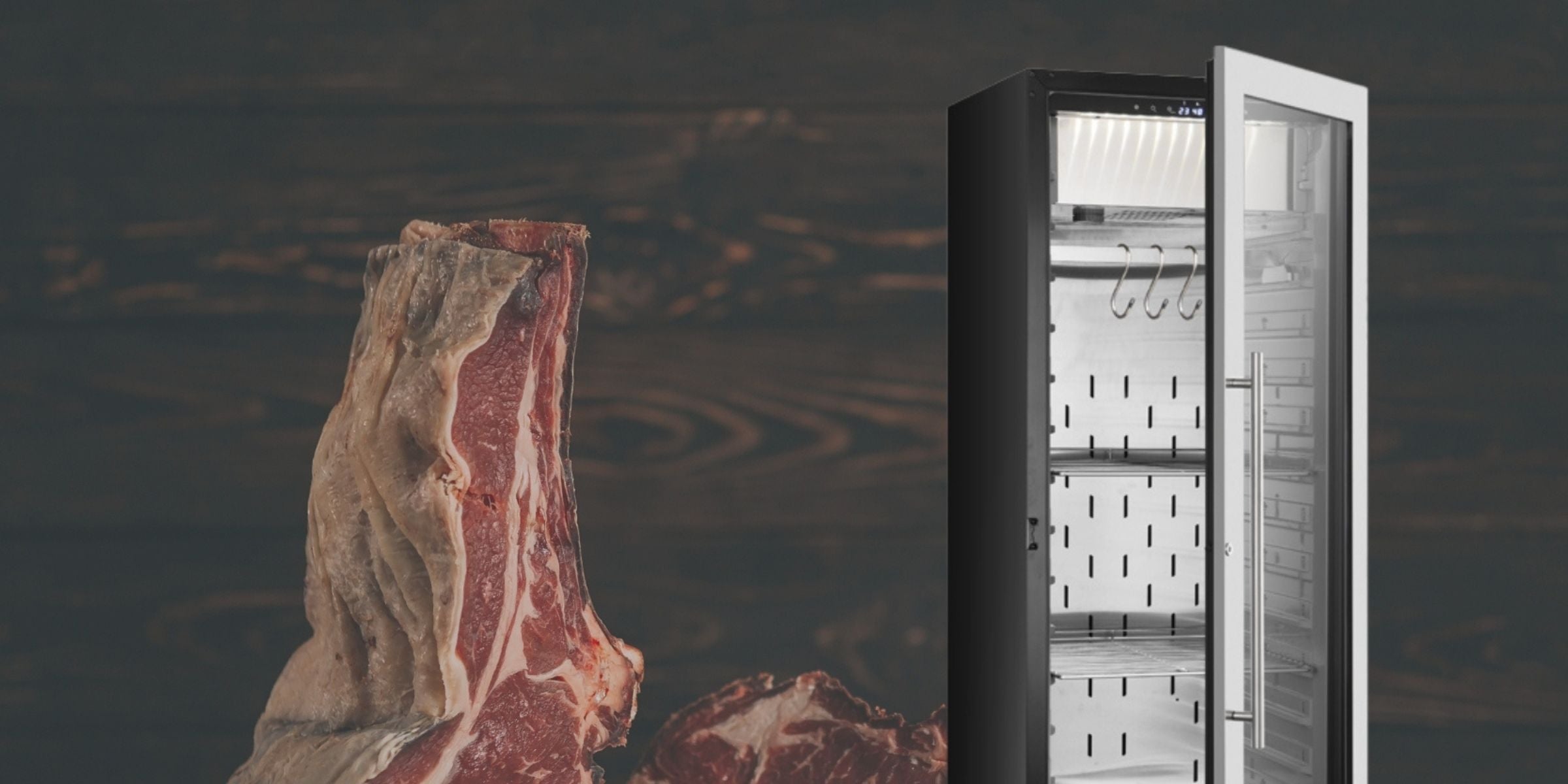
The Role of Dry-Aging Refrigerators
Modern dry-aging refrigerators have transformed what was once primarily a commercial process into something accessible for passionate home cooks.
These specialized refrigerators are designed specifically to support the unique requirements of meat aging.
Unlike conventional refrigerators, dry-aging units focus on maintaining:
-
Stable temperatures
-
Controlled humidity
-
Consistent airflow
-
Proper circulation around the meat
The result is a more predictable environment for flavor development and moisture management.
For enthusiasts who regularly purchase premium beef, dry-aging refrigerators can provide a level of control that simply isn't possible with standard kitchen refrigeration.
They also allow users to experiment with different aging durations and cuts, helping them discover personal preferences over time.
How Aging Time Influences Flavor Development
One of the most fascinating aspects of dry aging is how dramatically flavor evolves over time.
The experience of eating a 30-day dry-aged steak can be very different from eating one aged for 90 days.
21–30 Days: The Introduction to Dry Aging
This range is often recommended for newcomers.
Benefits include:
-
Improved tenderness
-
Mild flavor concentration
-
Familiar beef character
-
Broad appeal
Many consumers immediately notice enhanced richness without encountering flavors that feel dramatically different from traditional steak.
45 Days: The Popular Sweet Spot
Many chefs and steakhouse operators consider 45 days an ideal balance.
At this stage, the beef develops:
-
Greater complexity
-
More pronounced umami
-
Enhanced richness
-
Noticeable flavor concentration
The steak remains approachable while showcasing the benefits of dry aging.
60 Days and Beyond
Extended aging introduces more distinctive characteristics.
Flavors become increasingly:
-
Nutty
-
Earthy
-
Savory
-
Concentrated
Some enthusiasts describe these steaks as transformative experiences.
Others find the flavors too intense compared to traditional beef.
This illustrates an important point: the "best" aging period depends entirely on personal preference.
Why Restaurants Love Dry-Aged Beef
Premium steakhouses around the world continue investing in dry-aging programs despite the additional costs.
There are several reasons why.
Differentiation
Dry-aged steaks offer something customers cannot easily find in grocery stores.
The flavor profile immediately stands apart from conventional beef.
Premium Experience
Guests often associate dry-aged beef with craftsmanship and culinary expertise.
The visible aging process itself has become part of the dining experience.
Many restaurants proudly display aging cabinets as centerpieces within the dining room.
Flavor Intensity
Perhaps most importantly, dry aging produces flavors that many steak enthusiasts actively seek out.
For customers willing to pay for exceptional beef, dry aging often represents the pinnacle of steak preparation.
Why Wet Aging Continues to Dominate the Market
Despite the popularity of dry-aged beef among enthusiasts, wet aging remains the dominant method throughout the global beef industry.
The reasons are practical.
Wet aging offers:
-
Higher yields
-
Lower costs
-
Simpler logistics
-
Consistent results
-
Scalable production
For most consumers, wet-aged beef provides excellent tenderness and familiar flavor at a more accessible price point.
In fact, many people regularly enjoy wet-aged steaks without realizing it.
Most supermarket beef has undergone some degree of wet aging before reaching retail shelves.
This doesn't mean wet aging is inferior.
Rather, it reflects the reality that different methods serve different purposes.
Which Method Produces Better Beef?
After examining both processes, the answer may be less definitive than some steak enthusiasts would like.
Neither method is objectively better in every situation.
The ideal choice depends on what you value most in a steak.
Choose wet-aged beef if you prefer:
-
Traditional beef flavor
-
Excellent tenderness
-
Greater juiciness
-
Lower cost
-
Consistent results
Choose dry-aged beef if you prefer:
-
Flavor complexity
-
Richness
-
Intensity
-
Concentrated beef character
-
A premium steakhouse experience
Many steak lovers ultimately enjoy both.
A perfectly prepared wet-aged steak can be outstanding. Likewise, a properly dry-aged ribeye can deliver an unforgettable dining experience.
Rather than viewing the methods as competitors, it may be more helpful to think of them as different expressions of the same ingredient.
The Real Winner Is Personal Preference
The debate between dry-aged and wet-aged beef has existed for decades and is unlikely to disappear anytime soon.
Both methods improve tenderness. Both can produce exceptional steaks. Both have passionate supporters.
What ultimately separates them is flavor.
Wet aging preserves the clean, familiar taste most consumers associate with beef. Dry aging pushes flavor in a more concentrated and complex direction, creating the rich, nutty, umami-forward characteristics that steak enthusiasts often seek out.
For those interested in exploring the world of dry aging at home, modern aging refrigerators have made the process more accessible than ever before. With proper temperature, humidity, and airflow control, home cooks can experience firsthand how aging transforms premium cuts of beef over time.
In the end, the best beef is the one that delivers the eating experience you enjoy most. Whether that means a juicy wet-aged steak fresh from the grill or a deeply flavorful dry-aged ribeye aged for weeks under carefully controlled conditions, both methods demonstrate how time, patience, and proper storage can elevate beef from ordinary to extraordinary.